 That Nigerian prince requesting bank account information may be easy email fraud to spot, but what if a spoofed email arrived looking exactly like your boss? Business Email Compromise (BEC) scams are misleading employees into diverting company payments to swindlers who are impersonating customers, vendors, or senior executives.
According to FBI statistics, $1.6 Billion was lost by US companies between October 2013 and December 2016. Common scenarios cited by the FBI include fraudulent correspondence through a compromised email from a vendor or client, attorney impersonation, and wire transfer requests from a spoofed or hacked CFO email address.
The Hanover Insurance Group created a piece “Stop Imposter Fraud scams before they happen”. It's an excellent read pertaining to BEC. I’ve condensed some of their ideas from seven to four tips.
1) Verify all changes to fund transfer payments over the phone.
Employees with the authority to transfer funds should not change vendor, client, or employee bank account information without first confirming the change with a phone call. This phone number must be previously established and not a number provided on a potentially fraudulent email.
2) Be suspicious of emails calling for a rush transfer.
An email crafted to pressure an employee into transferring funds hastily should be a red flag. Employees should be trained not to fall victim to intimidation that might cause them skip authentication procedures.
3) Limit the number of employees with wire transfer authority.
Fewer authorized personnel mean fewer targets for fraudsters. Supervisors should be required to sign off on changes to vendor or client/customer bank account information or internal/external wire transfers.
4) If a scam email has been detected consult IT.
Stop the bleeding lest others be scammed. If a fraudulent email is coming from someone internally, your network likely has been breached. Actions should to be taken to secure the companies network.
Most insurance policies will not cover a BEC scam. The willful parting of money is often excluded from the language of contracts and usually requires the insured to add false pretense coverage to an existing plan.
Prevention is the ideal solution to BEC scams. Once compromised though, your only lifeline is false pretense coverage which normally is an addition. Be sure you’ve talked to your agent about the proper Social Engineering coverage.
 Each year National Cyber Security Awareness month is held in October. As such, many events are held around the country bringing together experts from government, industry and security to share information and enhance the dialogue around cyber risks.
 Did You Know? Water is the top preventable cause of damage to American homes — more than fire and theft. However approximately one in every 55 insured homes has a water/freezing claim each year.
 We recently had a Personal Insurance client report an auto claim to us. After we made sure the client was not injured, we took a deep breath and started the process of submitting a claim. The submission process typically includes gathering details of the accident and getting the appropriate insurance carrier involved.
 It’s a common sight at any industrial park, but five open loading dock doors in front of a moody OSHA inspector could land your company a $63,375 fine!
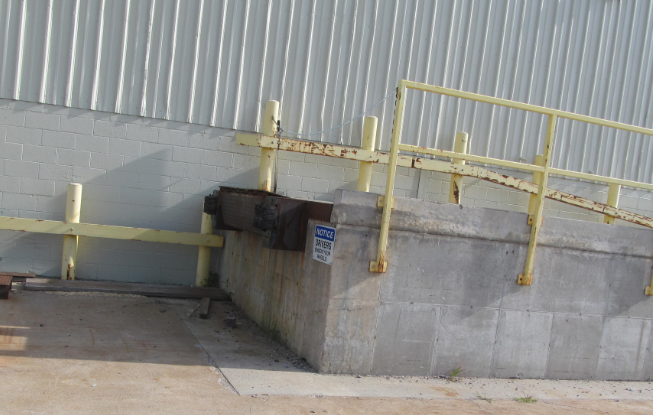 OSHA’s new ruling requires edges 4 feet or more in the air to have one of three methods of protection: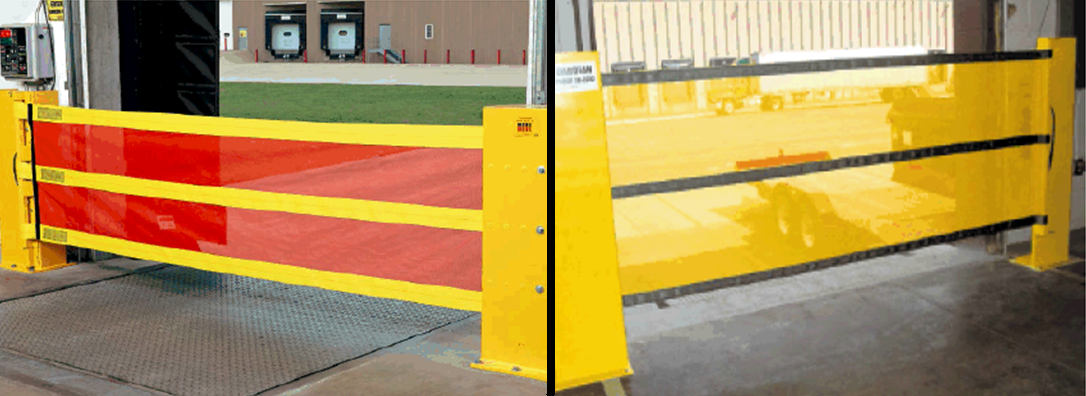
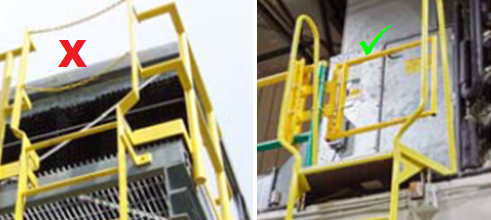
 Another target of the January 17 language is guarding on fixed ladders. Stationary ladders must have a guard at their opening in order to be complaint. OSHA would frown on the ladder below.
 The January rule changes also call for a Walking Worker Surfaces Inspection. These inspections are to be done “on a regular schedule” and “when necessary”. These inspections are to be adequate enough to identify slip, trip, and fall hazards. Employers are mandated by the new rules to have a scheduled WWS inspection and to conduct more when conditions or events occur that warrant an additional check.
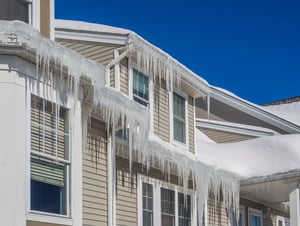 The freeze-thaw combination we experience during winter creates ice dams that will send water down interior walls of your home when it melts. An ice dam is a ridge of ice that forms at the edge of a roof and prevents melting snow from draining off the roof. The water that backs up behind the dam can leak into a home and cause damage to walls, ceilings, insulation etc. A key indication that there is an ice dam problem is the appearance of large icicles hanging from the roof's edge.
.jpg?width=285&name=young-professionals(small).jpg) We’re proud to be supporting the
We’re proud to be supporting the 
 From Hurricane Harvey and Hurricane Irma, to winter weather that will likely hit Wisconsin later this year - it's never too early to prepare for catastrophic storms. Whether you are a business owner or have personal property, here are steps you can take to better prepare for storms, and ways to expedite the process in the event of a claim:
 The decision to purchase Life Insurance to protect your family income and/or your business interest is extremely important; but, when was the last time you reviewed that coverage? A lot has changed over the past few years in the Life Insurance market and if you have not reviewed this recently then now is the time! With people living longer, rates have come down and insurance carriers have strengthened their product portfolios by adding additional features that consumers have demanded.
 As a financially successful individual, you have proven yourself to be money savvy – saving when you can and investing wisely. But are you spending your hard-earned wealth wisely when it comes to insurance?