

<img height="1" width="1" style="display:none" src="https://www.facebook.com/tr?id=1602061480087256&amp;ev=PageView&amp;noscript=1">

R&R Insurance Blog

1,500 Pages of Regulations a Week!

Posted by Riley Enright

health benefits fileWith Obamacare, there are 1,500 pages of regulations being created every week that will forever change the way the individual and small businesses pay for health insurance.

In the largest redistribution-of-wealth scheme this country has ever seen, 'Obamacare' will begin a series of annual assessments and taxes on insurers to the tune of over $14 billion in 2014 and $18 billion in 2018.

Exploring creative strategic alternatives like private insurance exchanges, self-funding and co-employment partnerships are wise considerations. As well, businesses need to make sure that they are receiving more than just health insurance from their broker. Risk management, compliance, health and wellness, communication and education as well as individual insurance options should be on your radar.

Join our group on LinkedIn: Obamacare: Strategies for Business to Survive. We welcome you to join in the conversation with our LinkedIn group dedicated to discussions for business owners on Obamacare: Strategies for Business To Survive. Read articles, download documents, join the conversation, and add your expertise!

Topics: Employee Benefits, Health Reform

5 Things Every Employee Can Do to Help Save Money on Health Care Costs

Posted by Riley Enright

Steth_MoneyHere are 5 easy things to remember to help save yourself some money when it comes to your own health care costs.

1) Compare costs of health care services

  • Check with your doctor or health care facility and compare the cost of services before receiving care
  • Make sure the charges are covered by your health care plan.
  • Employees can use health care transparency tools to help estimate costs.

2) Prescription choices

  • Generic prescriptions are a great choice for less cost.
  • Utilizing a split-pill or mail order program can also save you a lot of money.

3) Choose In-Network Options

  • Choose in-network providers.
  • When doctors order routine lab work or when you enter a health care facility for services, always as for an in-network option.

4) Save emergency rooms for emergencies

If you are not experiencing a true emergency, visit your doctor or go to a walk-in clinic.

5) Take care of health conditions before they become costly

  • Costs related to chronic conditions can be kept in check when employees learn how to improve their overall health.
  • Participation in an annual bio metric screening is a good way to start understanding your own health.

For more information about WellCompForLife, about self-funding your health insurance plan, health care reform or basic employee benefits questions, contact knowledgebroker Riley Enright.

Join our group on LinkedIn: Obamacare: Strategies for Business to Survive. We welcome you to join in the conversation with our LinkedIn group dedicated to discussions for business owners on Obamacare: Strategies for Business To Survive. Read articles, download documents, join the conversation, and add your expertise!

Topics: Employee Benefits, Personal Insurance, WellCompForLife

Obese Workers More Likely To Report Injury

Posted by Maureen Joy

Has your company considered the link between obesity and occupation injury?

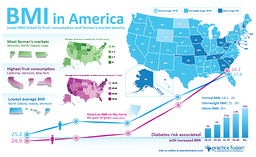
Journal of Obesity published a recent study by Ian Janssen, et al., which examines this relationship. A sample of 7,678 adult Canadian workers, were placed into normal weight, overweight, and obese categories based on their BMI body mass index. Findings show obese workers were more likely to report occupational injuries, with a great frequency of strains and sprains, along with falls and overexertion injuries. Interestingly, workers 40+ years, female workers and workers in sedentary occupations were particularly vulnerable. While there was not significant increased risk found with the overweight individuals, the impact of loss productivity, absenteeism and overall health costs should be further studied.

At R&R, we are seeing more and more small businesses in Wisconsin having serious discussions about the link between obesity and workplace injury. On top of that – when you factor in wellness programs that will increase the health and longevity of employees and their families – small businesses can have a lot control over their health insurance costs and the productivity of their employees - control that they don't know they have. At R&R Insurance, we call this program WellCompForLife! Join the WellCompForLife discussion on LinkedIn!

For more information about WellCompForLife, about self-funding your health insurance plan, health care reform or basic employee benefits questions, contact knowledgebroker Riley Enright

Topics: Safety, Workers Compensation, Employee Benefits, Wellness, Resource Center, Business Insurance, WellCompForLife

Self-Insurance is a Loophole for Small Businesses

Posted by Riley Enright

NorthBay Adventure, a small Maryland adventure camp for 6th graders with 30 employees, is making then news because they became self-insured last year. As a result, they are saving 45% on their health care insurance costs, and they have basically removed themselves from the ACA requirements. As noted in the article from Kaiserhealthnews.org, self-insuring is a loophole for the small employer to get out of the ACA requirements.

NorthBay Adventure Saves Money Credit: KAISER HEALTH NEWS / Kyle Grantham for USA TODAY

More and more small businesses like NorthBay are avoiding the health act's requirements through self-insuring coverage.Self-funding in the past has been more typical for larger employers. Self-insured employers pay for most worker health costs directly, though they contract with an insurer or other company to administer claims. The employers also buy coverage known as stop-loss for claims exceeding a certain amount.Free Download: Loopholes for Self-Funded Plans document

Loopholes

For more information about WellCompForLife, about self-funding your health insurance plan, health care reform or basic employee benefits questions, contact knowledgebroker Riley Enright.

Join our group on LinkedIn: Obamacare: Strategies for Business to Survive. We welcome you to join in the conversation with our LinkedIn group dedicated to discussions for business owners on Obamacare: Strategies for Business To Survive. Read articles, download documents, join the conversation, and add your expertise!

Learn how Voluntary Benefits are impacting small businesses and their ability to attract and retain employees during this time of benefit change.

Topics: Employee Benefits, Wellness, Health Reform, Self Funded Health Insurance, WellCompForLife

Voluntary Benefits to the Rescue!

Posted by Riley Enright

checklistAs we move forward through the stages of healthcare reform, one thing is for certain: employers need to continue to attract and retain the best employees... this has long been true. Today, differentiation will be the key. Enter Ancillary benefits also known as Voluntary benefits!

Voluntary benefits enable employers to offer their employees the ability to choose from a menu of benefits that meet the employee’s needs, even if the employees pay the full cost of those benefits.

Offering voluntary benefits for your employees through a group purchase platform can be better for both you and the employee. Here are 3 great reasons to purchase ancillary benefits through a group platform:

  1. Higher guarantee issue limits
  2. Fewer underwriting hassles
  3. Usually lower premiums
    BONUS: many of these benefits can be paid with pre-tax dollars, which is a plus for both the employee and the employer.

Voluntary benefits could very well be the rescue employers are looking for - and in the very least - your employees will have extra protection, and it will continue to set you apart from other employers.

Would you like to know where your company fits in regard to your benefits offering? Do you have a plan for Obamacare and reform? Have you considered self-funded? We have the answers to these questions and more. Contact knowledgbroker Riley Enright for an up-to-date discussion of your benefit concerns.

Join our group on LinkedIn: Obamacare: Strategies for Business to Survive. We welcome you to join in the conversation with our LinkedIn group dedicated to discussions for business owners on Obamacare: Strategies for Business To Survive. Read articles, download documents, join the conversation, and add your expertise!

Related Article:
Ease Pain of Reform for Employees: Offer Generationally Attractive Voluntary Benefits

Topics: Employee Benefits, Wellness, Health Reform, Voluntary Benefits, WellCompForLife

Release of exchange insurers intended for July

Posted by Jane Shevey

April 30th was the deadline for the Wisconsin health insurers to motion if they will join the exchange. While Gov. Scott Walker rejected a state run exchange, insurers still needed to file their plan designs for the federally run exchange. However, information on their plan designs and rates will not be released by the Office of Commissioner of Insurance until July. With enrollment for the exchange scheduled to start in October for January 1, 2014 renewals; this information is essential to companies considering whether to continue offering medical benefits or to send their employees to the exchange.

Companies with 50+ employees are those mainly looking toward the exchange. The penalty for not providing health insurance is $2000-$3000 per employee per year; much less than paying for health insurance with double-digit increases on the horizon.

Reasons for the high premiums may be because of the following inclusions:

  • High risk profiles for those in the exchange that other insurers won't cover.
    • Pre-existing conditions
    • Members in the Wisconsin Health Insurance Risk-Sharing Plan (HIRSP)
  • New limit on ratings based on age.

Wisconsin Business; for more information regarding R&R’s Play or Pay calculator; contact Jane Shevey.

Topics: Employee Benefits, Health Reform, Healthcare, Business Insurance

How do claims analytics reports lower health care costs?

Posted by the knowledge brokers

Claim analytics reports can target high risk claims and provide ideas to lower health care costs. The average employer will pay an additional $3000-$4000 annually per risk per employee, so it is important that a company works with an insurance agent to strategize on the following:

  • Isolate problem areas
  • Customize a wellness program to focus on prevention and high risk reduction
  • Educate employees on the effects of a negative lifestyle
  • Capture premium savings by making plan changes

WellCompForLife is R&R's stretigic method to controling health care costs. For more information, contact Knowledge Broker Laura Stehno today.


Topics: Employee Benefits, Wellness, Healthcare, Business Insurance, WellCompForLife

Gathering claims analytics reports

Posted by the knowledge brokers

Obtaining claims analytics reports and identifying areas of concern shown in the claims history can easily be done by your insurance angent. Insurance agents are the key to guiding large employers on the best approaches for their company and develop cost-savings options. Using analytical tools, such as a benchmark, will also help a company see how their plan matches up in their industry and size.

R&R's stretigic method to controling health care costs is WellCompForLife. Contact a R&R Knowledge Broker today to develop your cost-saving options.

Topics: Employee Benefits, Wellness, Healthcare, Business Insurance, WellCompForLife

Additional options to control rising health care costs

Posted by the knowledge brokers

Collecting claims analytics reports and finding trends are the first steps to keeping your health care costs under control. But what comes next?:

  • Engage employees to participate in a wellness program by offering incentives.
  • Participate in a health risk assessment and receive a reduction in your monthly premiums.
  • Provide educational programs on general nutrition, healthy eating and stress management.
  • Work with Managers/Supervisors to increase their support and change the culture to motivate employees to participate.

R&R's stretigic method for controling health care costs is WellCompForLife. Wisconsin Businesses, for more information regarding R&R's WellCompForLife, contact Laura Stehno.

Topics: Employee Benefits, Wellness, Healthcare, Business Insurance, WellCompForLife

Control rising health care costs by evaluating claims analytics reports

Posted by the knowledge brokers

Evaluating claims analytics reports have become the solution for employers who are seeking ways to regain control of their rising health care costs. Rapidly rising health care costs have consumed company’s profits and loss statements. So employers should identify problem areas, implement wellness programs and make necessary plan changes.

What medical claims impact rising insurance costs? The most commonly seen medical claims fall into six major categories:

  • Asthma
  • Coronary heart disease
  • Depression
  • Diabetes
  • High blood pressure
  • Obesity

Wisconsin Businesses, for more information on ways to regain control of your rising health care costs; contact a R&R Knowlege Broker today.

Topics: Employee Benefits, Healthcare, Business Insurance